
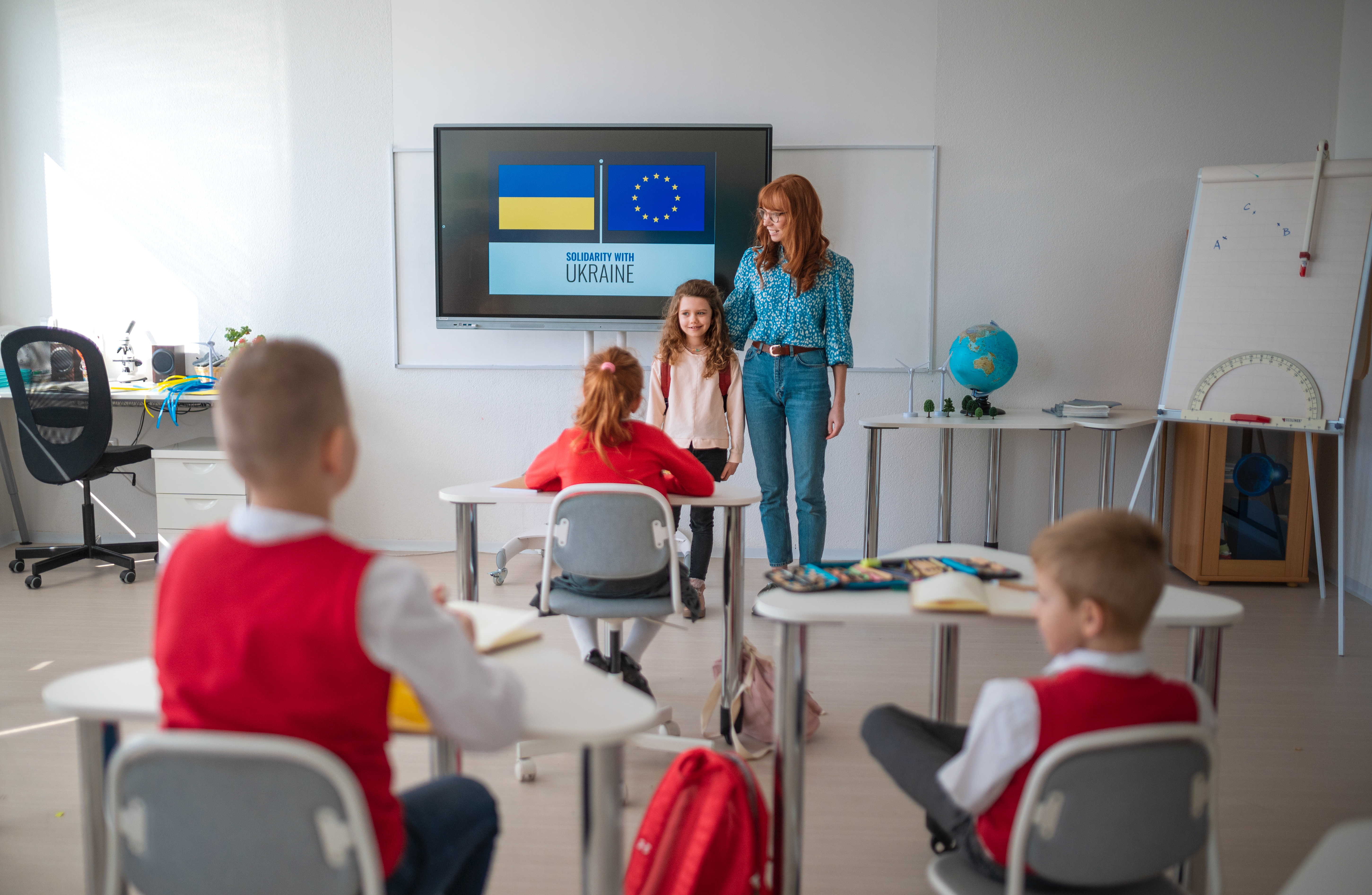
Education has always been the foundation of human progress, but in today’s digital era, technology is revolutionizing the way students learn and teachers teach. The traditional classroom setup of chalkboards and textbooks is being replaced by smart classrooms equipped with modern digital tools. But exactly what is smart classroom? Simply put, it is a technology-enhanced learning space that uses advanced tools like projectors, interactive boards, and internet-enabled resources to create an engaging environment for students.
The combination of innovative teaching methods and the use of technology in teaching and learning not only makes education more interactive but also ensures deeper understanding. In this article, we will explore the benefits of technology in education, the role of smart board for classroom, and how smart classroom technology is transforming education across the world.
Table of Contents
- What is Smart Classroom?
- Benefits of Technology in Education
- Differentiating Knowledge and Education
- Smart Boards in Classrooms: A Revolutionary Trend
- Smart Classes Educational: Reconstructing Learning
- Innovative Teaching Methods in Smart Classrooms
- The Role of Smart Classroom Technology
- How ICT Enhances Education
- Smart Classroom Challenges
- The Future of Smart Classrooms
- Conclusion
What is Smart Classroom?
To understand its impact, we first need to answer: what is a smart classroom? A smart classroom is a digitally equipped learning space that integrates information and communication technologies (ICT), interactive devices, and multimedia content.
In smart classrooms, students no longer depend solely on textbooks as learning materials. They have the opportunity to use videos, online simulations, and other varied digital resources. Teachers use smart boards in the classroom to visually illustrate concepts, making lessons captivating and understandable.
Smart classrooms enable a transition from rote memorization and learning to experiential learning. They assist educators in implementing innovative teaching strategies which encourage student participation rather than passive listening to the lesson.
Benefits of Technology in Education
In smart classrooms, the use of technology in education proves to be beneficial in many ways. Some of the primary benefits include,
- Improved Engagement: Interactive activities like videos, quizzes, and real-time problem-solving tasks ignite interest.
- Better Understanding: Complex topics become easier to understand through visuals, animations, and other simulations.
- Personalized Learning: Smart classrooms enable teachers to customize lesson plans to fit the needs of students.
- Collaboration and Communication: Group activities and technology tools promote discussions and knowledge-sharing.
- Access to Global Resources: Internet-enabled smart classrooms expand learning materials and resources to a global scale.
- Sustainability: Less paper is used when educational materials are digital, promoting eco-friendly education.
Incorporating technology in teaching and learning makes students more proficient academically, as well as prepares them for a digital, technology-rich world.
Smart Boards in Classrooms: A Revolutionary Trend
Among the most influential innovative classroom technologies is the smart board for classroom. Unlike blackboards, smart boards are interactive touch screen displays that allow teachers multisensory learning with lesson presentations, digital writings, and lesson streaming with videos and other learning materials.
Smart boards certainly allow teachers to:
- Display lesson materials in various forms including drawings, animations, and videos.
- Solve problems with students in real time and participate physically to solve problems.
- Archive lessons for later retrieval.
- Make learning more exciting and interactive with educational games and quizzes.
Smart boards foster the teaching and learning of science, mathematics, and geography.
Smart Classes Educational: Reconstructing Learning
Smart classes education is building new approaches to teaching as well as teaching tools. It comes down to reframing learning as a student-centered activity.
In traditional learning environments, students are the passive recipients of knowledge. Teachers provide learning materials while students listen. Smart classes, on the other hand, increase student participation through collaboration, digital project development, and virtual experimentation. Such environments foster student inquiry and creativity, as well as a plethora of online learning resources, including classes and lectures from global experts.
This is a clear pointer to the reality of ICT improves education. It narrows the distance between the world of teaching and real life.
Innovative Teaching Methods in Smart Classrooms
Innovative teaching methods are encouraged in smart classrooms. Teachers are able to step outside the textbook. For example, they can implement:
- Flipped Classrooms: Students learn concepts at home through videos, then engage in discussions and problem-solving during class.
- Gamification: Incorporating quizzes, puzzles, and games to boost participation.
- Blended Learning: Traditional teaching methods are combined with digital approaches.
- Project-Based Learning: Students are encouraged to digitally research and present topics.
These methods maintain excitement in learning and foster critical thinking, effective communication, and collaboration skills.
The Role of Smart Classroom Technology
Smart classroom technology is more than just smart boards. It encompasses:
- Digital Projectors: Large group multimedia content presentation.
- Tablets & Laptops: Individual resource access.
- Learning Management Systems (LMS): Progress tracking, assignments, and feedback.
- Virtual Reality (VR) & Augmented Reality (AR): Immersive learning experiences, like exploring the solar system or visiting historical monuments virtually.
Schools enhance the learning experience by integrating these technologies.
How ICT Enhances Education
The improvement of education with use of ICT is prevalent in today’s pedagogy, and for good reason. Information and Communication Technology has transformed education by:
- Making learning materials accessible.
- Enabling teachers to evaluate data to assess student performance.
- Assisting distance and online education.
- Facilitating collaborative work through digital means.
For learners, ICT strengthens academic learning while also developing digital literacy, which is an essential employment skill.
Smart Classroom Challenges
Smart classrooms come with challenges which include:
- High Costs: It can be expensive to set up and maintain digital infrastructure.
- Training Teachers: Not all teachers can effectively use smart classroom technology.
- Digital Divide: Accessing resources may not be equitably available to students from economically disadvantaged backgrounds.
- Distraction: Technology may be misused by students without appropriate guidance.
To maximize the challenges of technology in education, these challenges need to be addressed.
The Future of Smart Classrooms
The Future of smart classes is promising. Classrooms will become interactive and tailored to the individual student with the use of Artificial Intelligence, Virtual Reality and other adaptive learning technologies.AI can forecast student progress and recommend adjusted learning plans. Education will be more readily available and anchors will continue to be cloud systems, allowing users to access it at any time and from any location.
No doubt, evolving technology will continue to empower teachers and learners, and improve results on all sides.
Also Read: How Artificial Intelligence is Revolutionizing Education: The Future of Learning in India
Conclusion
Finally, defining what is smart classroom illustrates the innovative changes in the educational field. Efficient learning environments arise from the mixture of smart classroom technology, along with innovative pedagogy and ICT.
Technology in education impacts learners in more positive ways beyond pure educational objectives. Creativity, collaboration, and future-focused competencies are developed through technology-rich innovative pedagogy. The range of educational technologies is spectacular, beginning with classroom smartboards and advancing to virtual reality.
Undeniably, smart classes education is changing educational systems. Further ICT enhances learning and teaching; it becomes apparent that ICT is highly integral to learning and teaching.
