
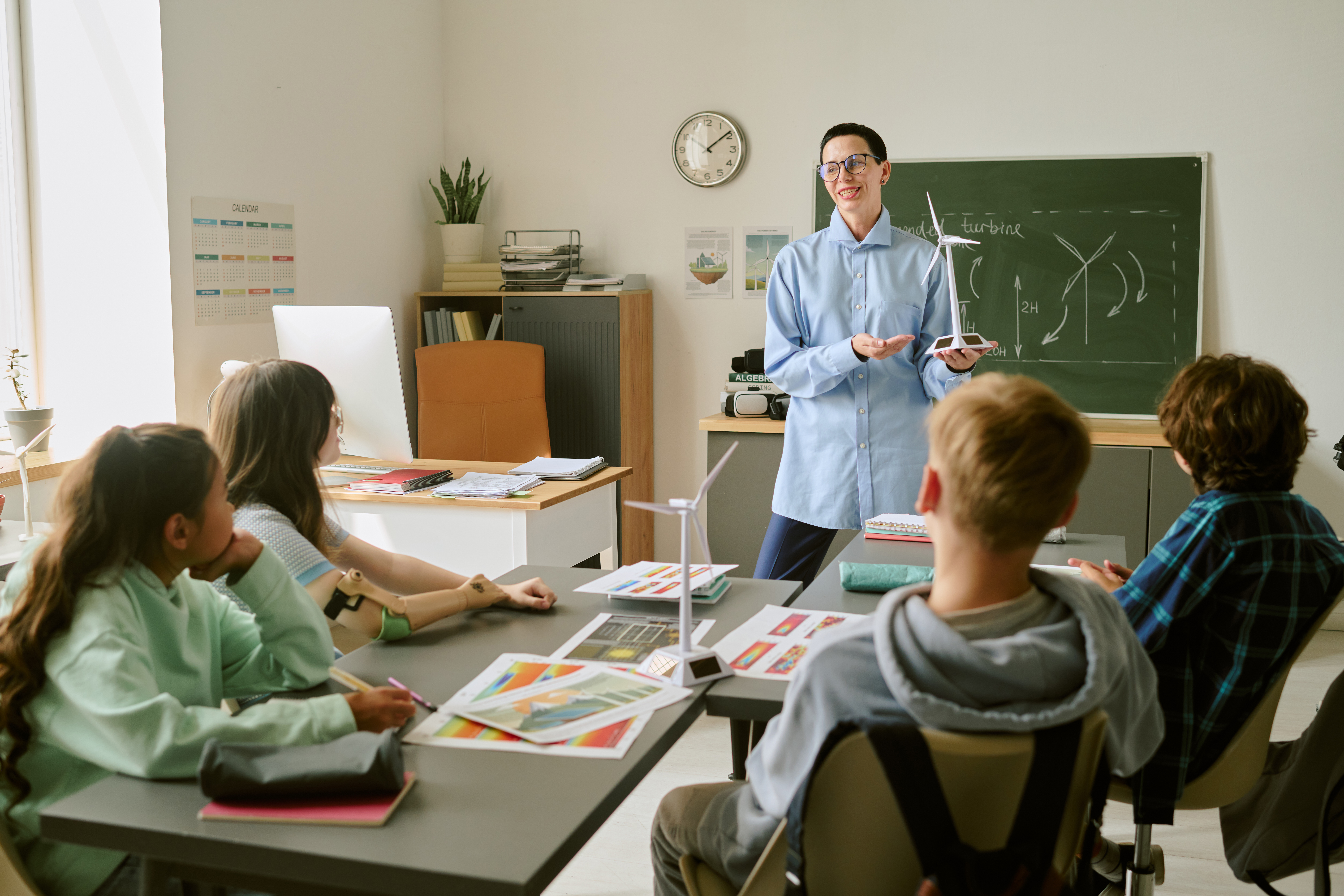
The learning environment in the classroom constructs an influential component of student performance, personal growth, and overall attitude towards learning. A classroom is more than a physical perimeter that comprises desks, chairs, and a board. It is an active space for knowledge dissemination, curiosity stimulation, and nurturing of the minds. Teachers, in working on creating conducive learning environment strategies, assist learners both emotionally and academically. In the contemporary education system, the question is, how would you create an innovative learning environment in order to prepare the learners for life in the outside world?
Table of Contents
- Interpreting the Classroom Environment
- Innovative Learning Environments and Their Values
- Principles of Creating a Conducive Learning Environment
- Strategies: How Would You Create an Innovative Learning Environment?
- Role of Teachers in Creating a Conducive Learning Environment
- Involving Parents and Community
- Future of Innovative Learning Environments
- Mayoor School: An Exemplary Model in Noida
- Conclusion
The concentration of this article is on the practices and principles that educators and the entire school can apply to help nurture a positive learning environment. It also focuses on the cultivation of healthy school practices, the need for balance in teaching approaches, and the development of fostered creativity in class.
Interpreting the Classroom Environment
The classroom environment is a mix of social relationships, physical circumstances, and the methodology and emotional scaffolding of instruction that are all geared towards achieving the learning outcomes of the student. It includes:
-
Physical environment: The arrangement of furniture, the light, the air, and vending and instructional materials.
-
Psychological environment: The feelings and relationships that the teachers and the other students create.
-
Instructional environment: All the teaching methods, the technologies employed, and the activities used for learning.
An effective learning environment in the classroom is one where students feel secure, appreciated, and praised and where they also have the enthusiasm to work. It strikes a balance between discipline and freedom, order and structure, and creativity and skill.
Innovative Learning Environments and Their Values
Owing to the fast-progressing technology, the global flood connectivity, and the rapidly changing job markets, the age-old teaching method that only depends on rote learning is no longer effective. Education is no longer static. How to create an innovative learning environment has been one of the most pressing worries for educators in recent years.
Some of the innovative learning spaces may:
-
Cultivate creativity and the ability to solve problems.
-
Promote collaboration.
-
Encourage adaptability to the challenges of the future.
-
Enhance self-confidence and communication abilities.
-
Promote rigorous and analytical thinking.
By improving the classroom environment in schools, students who focus only on test results as their educational goal can be turned into students who embrace learning for a lifetime.
Principles of Creating a Conducive Learning Environment
An educator has to meet certain criteria to be able to design and maintain a conducive learning environment.
-
Safety and Comfort – The students need to be physically and emotionally safe.
-
Engagement – Students should be a part of teaching and learning activities. Such activities may include discussions, debates, and projects.
-
Inclusivity – Learners, regardless of their background and capability, should be respected and appreciated.
-
Flexibility – Class teachings should be adaptable to meet the learning needs of the students.
-
Encouragement – Provide positive feedback to foster self-esteem, enthusiasm, and perseverance to attain their goals.
These principles enhance the students' eagerness to learn during class.
Strategies: How Would You Create an Innovative Learning Environment?
To foster an innovative learning environment, a blend of technology, pedagogy, and mindset changes is crucial. Below are effective strategies to answer the question, how would you create an innovative learning environment?
1. Redesigning the Physical Classroom
-
Students may learn from each other within their groups, with their desks arranged in clusters.
-
Bright colours and, where possible, natural light, foster the needed atmosphere for creative thinking and behaviour.
-
Reading, project, and technology-based learning may be done in distinct areas.
-
Students are more involved with the lesson when they use interactive boards and other digital displays.
2. Integrating Technology
-
Students' ability to grasp lessons quickly and with more ease is enabled by the use of smart boards, tablets, and projectors.
-
Learners are able to appreciate the lessons more when VR and AR are used.
-
These platforms enable the learners to collaborate and submit their assignments with ease.
-
Learning fosters positive competition between students when gamification apps are used.
3. Motivating Cooperative Learning
-
Learning through conversations, peer-assisted learning, and through project work.
-
Role-playing and debating for the purpose of enhancing oral communication and reasoning skills.
-
Cross-disciplinary projects integrating the principles of science, art, and technology.
4. Cultivating Positive Learning Behaviours
Developing Positive Learning Behaviours allows for productive realisation of goals:
-
Fostering the habit of reading to the purpose of critical thinking.
-
Setting individualised learning objectives.
-
Exercising self-control and effective scheduling.
-
Developing a positive approach to solving problems by accepting challenges as an opportunity to learn.
5. Focus on Students
Stop concentrating on the instructor and start concentrating on the learner.
-
Students choose their own projects and topics to research for in-depth learning.
-
Students should be encouraged to ask and to learn on their own.
-
Let the students take the lead in their groups.
6. Ongoing Evaluation and Feedback
-
Focus on process assessment as well, instead of only concentrating on terminal assessment.
-
Make a habit of providing feedback as often as possible, which should be in the form of positive, constructive criticism.
-
Students should be given self-assessment tools to promote accountability.
7. Creating a Positive Physical Setting
A Positive Physical Setting has great value for the productivity of class work.
-
Classrooms should be tidy, well-organised, and clean, with proper airflow.
-
Libraries, laboratories, playgrounds, and other resources for learning should be easily accessible.
-
Support for mental well-being, as well as the range of other supports available, should be encouraged.
-
Mental well-being and promotion of active movement for better health should be encouraged.
In order to achieve a Positive Learning Environment that fosters creativity, teamwork, and holistic development, a combination of these strategies should be implemented.
Role of Teachers in Creating a Conducive Learning Environment
The classroom atmosphere is affectionately shaped by the teacher's personality and the techniques used to engage the learners. They are the ones at the front of the classroom. Teachers are responsible for almost everything in the classroom. However, in contradiction to the traditional approaches to learning, the classroom should encourage learners to take an active role in the instructional activities. This is achievable by using the following techniques:
-
Exhibit compassion, patience, and active listening.
-
Accompany instructional freedom with stylistic and artistic boundaries.
-
Employ innovative instructional methods and techniques
-
Employ case studies, stories, and the use of practical, real-life situations.
-
Support inquisitive thinking and the ability to tolerate divergence.
When a teacher focuses on creating a positive learning environment, the students do not just pass their exams, but they also learn to become responsible and self-confident.
Involving Parents and Community
Not much can be done with the classroom environment if students are not exposed to the same at home. Therefore, the active participation of the parents and the community is of utmost importance.
-
Parents can cultivate and nurture positive and desirable learning behaviours.
-
Community members can arrange guest lectures for the students to expose them to first-hand experiences.
-
Teachers, parents, and administrators have to work together to ensure that there is reinforcement in the assistance given to the students.
Such students also have a better chance at thriving in self-directed learning. This combination enhances the learning experience and fosters an innovative, supportive ecosystem.
Future of Innovative Learning Environments
In the process of transforming pedagogy, there is a need to shift from conventional practices. The future of creating a conducive learning environment for students will include:
-
A hybrid model of blended learning that integrates synchronous and asynchronous components for teaching and learning.
-
A global classroom approach that enables students to join learning and teaching activities across borders.
-
AI-powered adaptive learning systems.
-
Increased emphasis on essential 21st Century skills like critical thinking, communication, and flexibility.
Investing in modern learning environments will ensure that the schools are not only preparing students for examinations, but also for life.
Mayoor School: An Exemplary Model in Noida
In covering the discussion on the best school in Noida, Mayoor School tends to be recognised in every corner for its relentless efforts in striving for educational excellence. The best school in Noida is recognised for providing a positive school environment and fostering innovation through an emphasis on bringing balance to learning, sports, arts, and technologies. At Mayoor School, teachers use a strategic approach to organise a conducive learning environment and motivationally design learning activities so that every child can inquire and pursue excellence.
Practical examples of innovation and modernity in teaching and strong pedagogical values are demonstrated in the way Mayoor School fosters positive learning habits in the students, and students, in turn, ensure that the modern-day advanced learning facilities available are optimally utilised. Mayoor School is the best model of a 21st-century school, exemplifying the appropriate classroom environment.
Conclusion
The learning environment in the classroom is the foundation of student success. By embracing innovation, inclusivity, and positivity, educators can transform traditional classrooms into vibrant learning hubs. From integrating technology to promoting collaboration and wellness, schools have countless opportunities to create a positive learning environment. Ultimately, when students develop positive learning habits in a healthy school environment, they grow into confident, creative, and responsible individuals. Institutions like Mayoor School in Noida are leading the way by proving that the key to education lies not just in teaching, but in how to create an innovative learning environment where every child can thrive.
