
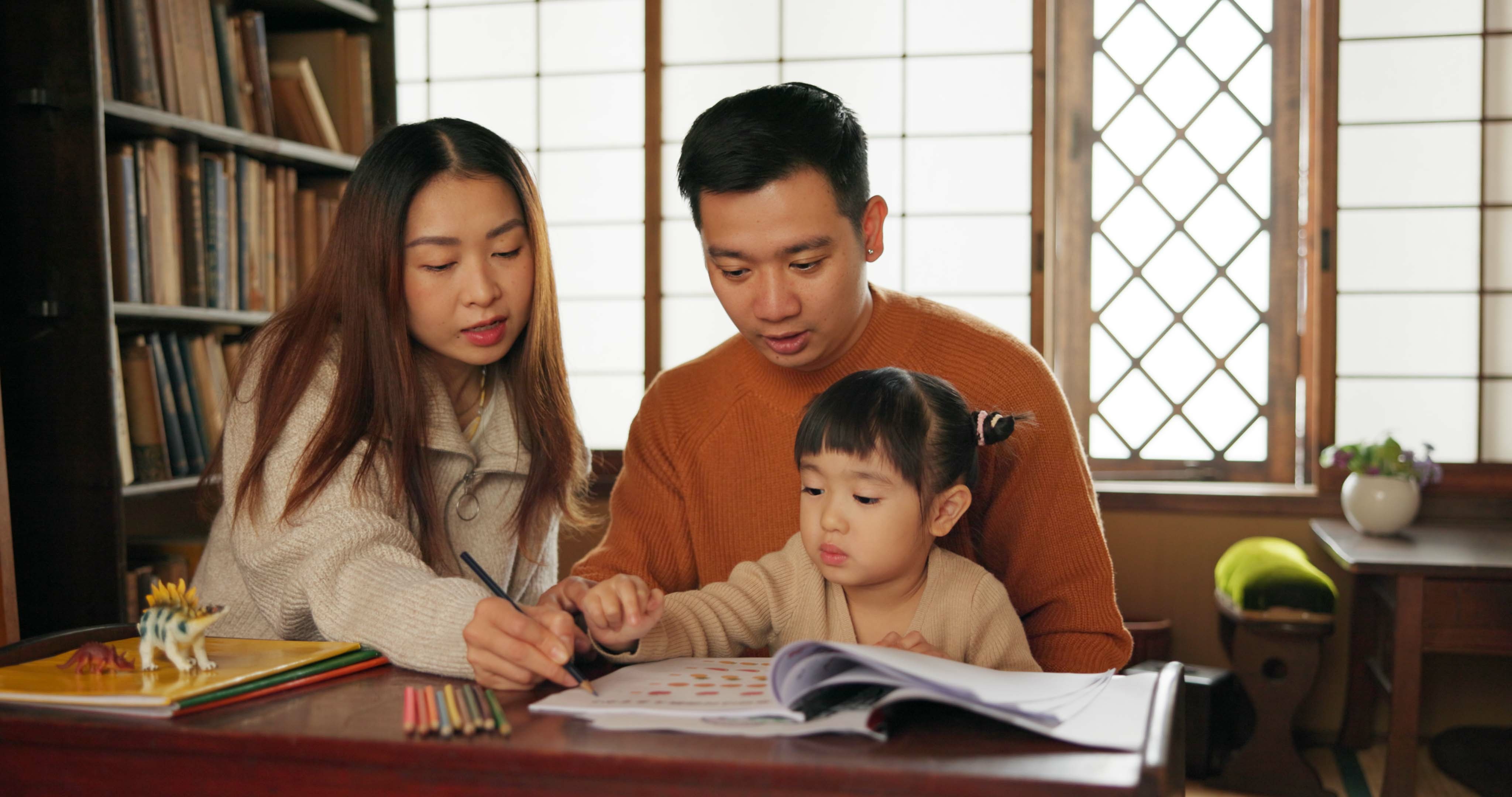
Education is not confined to the four walls of a classroom or the pages of a textbook. Learning begins at home and is facilitated in schools. The role of parents in education is as important as that of the teachers. Children get their first impressions, habits, and principles from the family. Parents’ involvement in education helps children relate the learned knowledge to real-life situations, because schools possess only organised knowledge.
Table of Contents
- Understanding the Role of Parents in Education
- The Need of Parents in Value Education
- Significance of Parental Participation in Education
- Responsibilities of Parents and Teachers in the Education of a Child
- What Parents Need to Know About Teaching Their Kids Home Schooling
- How to Improve Schools – Parent Recommendations
- A Parent’s Role in Supporting Education
- Role of Parents in Education Essays Synopses
- Increasing Challenges in Parental Involvement
- Conclusion
Parents not only aid in the academic performance of the children, but also help in the formation of personality, values, and guide the children’s holistic development in education. This article discusses the different ways in which parents can aid their children’s education, the role of parents in value education and the important home-school partnership that results in education success.
Understanding the Role of Parents in Education
The role of parents in education is more extensive than helping children with their schoolwork or attending parent-teacher conferences. Parents assume the functions of role models, mentors, and psychologists, who pave the way for the development of an individual as a lifelong learner. Parental involvement is the encouragement of discipline, curiosity, and extracurricular activities, which are all ways in which children are assured of support and encouragement.
Many roles of parents in education tell us that children with parents who are involved in their school work tend to demonstrate better academic performance, have better attendance, and better developed social competencies. They also have lower school dropout rates and are more likely to pursue higher education. This indicates how crucial parental involvement in education is in nurturing employable graduates.
The Need of Parents in Value Education
With respect to value education, parents are portrayed as the primary and most significant source. This is because the role of parents in value education is pivotal in teaching the child to be honest, empathic, kind, respectful, and disciplined. These parents can easily pass on these values through their daily interactions, role modelling, and storytelling.
For instance:
-
Learning how to show respect to elders and to peers.
-
Learning how to be honest even in the face of challenges.
-
Learning how to demonstrate care and empathic concern for other people.
-
Learning how to be responsible through taking on chores and being accountable for the same.
Ethics education is part of the learning offered at the best school in noida. This is usually taught in a more structured manner. However, parents who also support this at home enable their children to be better-rounded with respect to education, thus ensuring the integrated development of a child.
Significance of Parental Participation in Education
It is crucial to acknowledge that parental participation in education is crucial. It plays an important role in helping children feel comfortable and encourages them to learn. Children understand the importance of education and develop a sense of ownership that education is a collective effort of parents, teachers, and the children themselves.
Parental involvement yields positive results, such as:
-
Improved academic performance and enhanced grades.
-
Improved cognitive and verbal skills.
-
Improved levels of confidence and self-worth.
-
Decrease in disciplinary issues.
-
Increased participation in cultural and other activities.
As parents take part in school activities, workshops, and parent-teacher associations, they help enhance the school culture and help in its development.
Responsibilities of Parents and Teachers in the Education of a Child
The responsibilities of parents and teachers in the education of a child add to each other. Teachers explain the content, facilitate the learning process, and evaluate the outcomes, while the parents nurture the child emotionally, supervise and enhance the learning activities done after school. Both sides ensure the proper mental and emotional development of the child.
The main features of the partnership are:
-
Communication: Teachers and parents provide timely feedback to each other.
-
Reinforcement: Concepts learned in school are the same ones taught in the home.
-
Encouragement: Participating in extracurricular activities promotes balance and helps the child discover other interests.
-
Problem Diagnosis and Resolution: Potential problems can be dealt with preemptively.
A child's educational experience benefits from a jointly offered, coherent, and approving approach from both parents and teachers.
What Parents Need to Know About Teaching Their Kids Home Schooling
A common question parents have is, “What actions can I take to further assist my child in learning?” The elimination of barriers below helps advance the involvement of parents in educational activities.
1. Help Create a Learning Friendly Atmosphere
-
Allocate a proper and clutter-free place for studying.
-
Provide access to books, stationery, and the internet.
-
Exercise a discipline of balancing study with rest.
2. Encourage Good Learning Practices
-
Instil necessary time management skills and goal setting.
-
Appreciate efforts and not only achievements.
-
Encourage developing a reading culture and inquiry.
3. Educational Progress Monitoring
-
Provide supervision for the completion of homework.
-
Keep track of assessments and report card records.
-
Contact the teacher proactively to solve developing problems.
4. Involvement in Activities Beyond Schooling
-
Participation in sporting, artistic, and cultural activities should be motivated.
-
Nurture the understanding that learning is not the only goal.
-
Provide guidance to balance learning with extracurricular activities.
5. Support for Emotional and Social Growth
-
Empathy, kindness, and respect should be taught.
-
Participate in friendly activities to learn cooperation.
-
Support the children in learning self-control and other regulating devices.
Using both personal and academic means, the parents’ efforts promote their child’s advancement.
How to Improve Schools – Parent Recommendations
Parents actively take part in the school community. They often provide useful ideas that lead to meaningful changes. Some recommendations parents have on how to improve schools include the
-
Improved Communication – Digital tools, parent portals, and other regular updates from schools as to what is happening in the school.
-
More Non-Academic Activities – Skill development and other clubs, cultural activities, and programs that promote the development in education as a whole.
-
Mental Wellness Programs – Workshops and counseling for parents and students.
-
Flexible Curriculum – Incorporation of life and vocational skills, training, and technological education.
-
Active Participation of Parents – Participation of parents in activities and guest talks, cultural activities, career counselling, and other school programs.
Such parent-school collaboration is useful in valuing parent-school partnerships and strengthens the parent-school bond, creating a better school for the child.
A Parent’s Role in Supporting Education
The purpose of education is not just to pass an exam. It is to promote the development of an individual in many areas, including moral, social, emotional, physical, and academic. Parents support this by:
-
Supporting a child to take part in healthy activities.
-
Engaging the child in literature, music, art, and other creative activities.
-
Stress management and communication have proven effective in mental health development.
-
Being financially literate, making responsible choices, and showing accountability are some of the life skills taught.
Parents make sure that children develop in all the required areas that will allow them to be successful by adopting a whole-child approach.
Role of Parents in Education Essays Synopses
Most of the role of parents in education focuses on the same points:
-
Improvement of school performance is a result of active participation.
-
Foundational education is given by the parents, who are the primary teachers.
-
The relationships parents have with schools help children in education.
-
Emotional support is as crucial as academic support.
-
Parents and teachers working together help children learn ideas that will be useful in the future.
All these essays highlight the need to consider parents in the child’s education, as they are the most important factors in defining the child’s education.
Increasing Challenges in Parental Involvement
Parental involvement in education is important, but there are some difficulties that come with it, such as parents being busy, not enough resources, and ignorance of the parents. To solve those:
-
Schools should organise seminars that teach parents how to effectively get involved.
-
Parents who work can be accommodated by the parents with flexible meeting hours.
-
Virtual communication and updates can be provided electronically.
-
Campaigns can be run to create awareness of the need to consider parents in the child’s education.
Even the tiniest undertakings by parents can yield significant results if they get the right support.
Conclusion
Parents have and will always play an integral role in the educational system of a child. Parents have an influence on all the stages of a child’s learning journey, starting from nurturing values at home and helping with studies and activities. The collaboration of parents in value education, as well as parents’ role in collaborating with teachers and parents’ suggestions for school improvement, all aim at achieving educational success.
Active parental involvement in education not only boosts academic performance but also nurtures emotional well-being and character building, ensuring holistic development in education. In essence, education is a shared responsibility between home and school, and when parents engage actively, they pave the way for their children to become knowledgeable, confident, and compassionate individuals.
