

Experiential learning is not just about sitting in a classroom and listening to a lecture. It’s a hands-on approach where students learn by doing. This involves activities like experiments, simulations, and real-world projects that allow learners to actively participate and reflect on their experiences. Understanding the importance of experiential learning is that it promotes deeper understanding and lasting knowledge retention.
Table of Contents
- What is Experiential Learning?
- Key Benefits of Experiential Learning for students
- Why is Experiential Learning Important for Students
- Types of Experiential Learning
- Advantages of Experiential Learning
- Disadvantages of Experiential Learning
- Experiential Learning Examples
- The Role of Teachers in Experiential Learning
- FAQs
What is Experiential Learning?
Experiential learning is an educational philosophy that focuses on learning by doing. It goes beyond traditional rote memorization, encouraging students to learn through experience and reflection. This student-centered approach values personal engagement and active participation in the learning process. By engaging themselves, they will develop a practical skill to find a better solution and think more innovatively than before. So, experiential learning enhances the student's ability and gives them the ability to think more in depth.
Key Benefits of Experiential Learning for Students
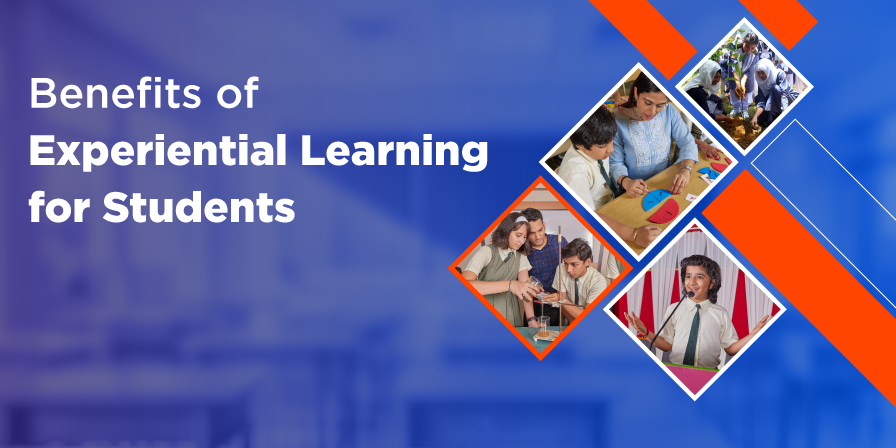
Think of the benefits of experiential learning as a superpower students can unlock. Increased knowledge retention and improved engagement are on the list, helping kids absorb more and study even better. That helps make school less of a chore, and it's a plus for career skills.
Enhances Knowledge Retention
Engaging in hands-on projects and real-world simulations helps solidify knowledge in a more lasting manner than reading and memorization alone. Experiential learning makes sure that students do not just memorize facts. Also, it helps students internalize concepts better so that they can apply their learning in new situations.
Develops Problem-Solving Skills
When faced with real problems and making decisions, students develop skills such as critical thinking, collaboration, and creativity, which prepare them for success beyond the classroom. Students begin to use the learnings that they have been provided, the learning also enables the child to gain new and creative insight to solve new and upcoming problems in the world.
Promotes Active Engagement
By giving experience, students are engaged to actively participate in the subject material by improving their interest and motivation. Unlike traditional learning, classroom experiential learning pushes pupils to actively take part and be responsible for their education. Active participation not only results in deeper knowledge but also encourages critical thinking and helps the students become enthusiastic about education.
Improves Interpersonal Skills
Collaborative tasks and projects help refine teamwork and communication abilities that help students in their professional lives. Working together on projects provides an opportunity to discuss the different aspects of work that will improve interpersonal communication among children. They will understand each other's points of view and thought process by keeping their ego aside and thinking for the greater good of the team.
Connects Theory with Practice
It gives a platform to students where students learn from both theory and real-world work and improve themselves with the situation by adopting things as per need. This bridging is very important to improve the application-based skills for each individual and make them think like a problem solver.
Why is Experiential Learning Important for Students
Consider the importance of knowing more and having an edge in life later. When classrooms feel relevant to outside jobs, everyone wins. Fostering collaboration means students know teamwork that ensures lifelong gains with better problem-solving skills and all-around grooming.
Fostering a Deeper Understanding
One of the most important reasons for the importance of experiential learning for students lies in its ability to foster understanding and to connect what they read in books with real-life experience. When the student practically experiences it, this solidifies understanding that will last for a lifetime. They see why theory is important and why practical knowledge matters.
Bridging the Gap Between Theory and Practice
The experience makes it possible to bridge the gap between theory and practice. Sometimes it happens that students are bored because they just keep reading theory, but with experience, they can correlate. It improves critical thinking skills. Students find the practical applications of the knowledge they get, which thus helps them grow.
Encouraging Collaboration and Teamwork
A great importance of experiential learning is that it encourages teamwork among students. When students come together to share experiences, this increases collaborative ability. When students participate as a team, their understanding improves to get the work done efficiently. Thus, it helps them improve teamwork skills.
Promoting Problem-Solving Abilities
Experiential learning online promotes problem-solving capabilities. It requires students to solve problems using the tools and resources, which encourages them to use different ways and think critically. In other words, it promotes the process of solving problems. Experiential learning helps them face difficulties.
Types of Experiential Learning
-
Internships: Working in a professional setting to gain real-world experience related to a field of study. Through internships, students can bridge the gap between classroom learning and professional work, and the types of experiential learning are numerous and very useful for students, giving them a glimpse into their prospective careers while honing practical skills. It can sometimes boost their chances to secure a full-time job post studies.
-
Service Learning: Combining community service with academic study to address social issues. Service learning is also an example of experiential learning in the classroom, and it not only benefits the receiver but is reciprocal, which helps the students enhance their sense of social responsibility.
-
Simulations: Participating in simulated scenarios to make decisions and experience their consequences. Simulations like flight simulation, business games create real-life scenarios that help students think and act with confidence. This is also ga ood way for the practical approach.
-
Fieldwork: Conducting research or gathering data in a natural setting. Fieldwork in courses allows students to conduct observation of the place physically, which can greatly aid in understanding things from a different point of view. This increases information-gathering skills and research skills.
Advantages of Experiential Learning
The most evident advantage of experiencing is how the real-life experience makes a deep mark on our lives. When we go out for studies, for a career, or for family, we can use real-life problem-solving and creativity everywhere. Understanding the advantages and disadvantages of experiential learning is important for everyday challenges.
Increased Motivation
Students are often more motivated when they are actively involved in the learning process. It has been observed that the advantages of experiential learning are that students learn with motivation when involved directly, which enhances their capability. When the learning process becomes engaging, student participation increases, resulting in good study. This can also trigger students to show their creativity.
Improved Problem-Solving Skills
Real-world experiences help students develop and refine their problem-solving abilities. Experiential learning improves thinking skills that are applicable in every sphere of life. This kind of practical knowledge makes them competent and confident. Also, problem-solving ability is required everywhere in professional life. It gives them advantages over others.
Better Retention of Information
Active participation leads to better retention of learned material compared to passive listening. The main advantages of experiential learning that anyone can recognize are improved memory. They learn concepts for a lifetime. Active participation makes learning memorable. They can recall anything instantly.
Development of Teamwork Skills
Many experiential learning activities require collaboration and teamwork. With increased awareness among students, it has been observed that the advantages of experiential learning are improved teamwork abilities, which increase their ability to complete assignments faster and efficiently. This greatly helps in project work when they work in a team. Experiential education creates harmony and belonging.
Disadvantages of Experiential Learning
One needs to be mindful that experiential Learning might include heavy time engagement, and resource limitations could bring challenges at times. The impact could become skewed by differences, and learning capabilities could vary. Careful assessment must have resources and a keen tracking of progress.
Time-Consuming
Planning and implementing experiential learning activities can be time-intensive. The experiential learning process may sometimes be time-consuming because proper planning requires time, and monitoring may take considerable time. Time management is a crucial element to keep track of, so planning requires more time to manage. More manpower is involved for every student.
Potential for Uneven Learning
Some students may benefit more than others, depending on their prior knowledge and skills. The impact of experiential learning may be uneven sometimes due to prior experience in the same domain. Those who are involved previously may learn quickly, while some may find little difficult because it is new for them. Some get things earlier than others.
Assessment Challenges
Assessing learning outcomes from experiential activities can be more challenging than traditional methods. Assessment might be a little challenging, as it can become difficult to test a practical approach or the process, so teachers need to be well-trained and expert to understand students' learning outcomes. Without a qualified examiner, judging learning capabilities becomes tough. It needs proper attention and evaluation.
Resource Intensive
Certain experiential learning activities may require specific resources and materials, increasing costs. In practice, everything requires investment, so it's one of the costliest ways. It includes field visits or equipment that require a good amount of investment to be spent on students. Every component needs to be handled carefully by kids with the proper method. Money matters for a valuable class.
Experiential Learning Examples

It is always suggested to follow experiential paths from the beginning; mock trials help to learn about the practical legal framework. While coding gives the skill to present on the web and many platforms, the right blend of theories enhances understanding through knowledge exploration. The students evolve and find themselves doing.
Science Experiments
Conducting hands-on experiments to understand scientific principles. Through science experiments, it helps them understand theories practically and in real life. Students may create and imagine everything easily when an experiment takes place. They get involved directly; that is the advantage. These experiential learning examples make complex understanding easier.
Mock Trials
Participating in simulated court proceedings to learn about the legal system. In a mock trial, they learn how the actual judicial proceeding works. This also improves how the law is implemented in society. This kind of learning prepares them for a job role as well. The experiential learning examples are vast, offering insights into all subjects.
Debates
Engaging in structured debates to research and present arguments on various topics. During debates, students explore topics widely to argue effectively, which helps their research skills, along with their ability to speak effectively. Examples of experiential learning in the classroom can improve all-around understanding for kids.
Coding Projects
Building software or websites to apply coding knowledge and problem-solving skills. With current and future perspectives, it becomes more important to build projects like software or websites using code that will be ready for future technologies. They will create new solutions to problems as well. The students explore real learning opportunities.
The Role of Teachers in Experiential Learning
The most vital element for the Experiential process with an experience-based approach. Teachers must create an environment for collaboration, and they can motivate them with valuable feedback. Most importantly, the guide helps them with timely knowledge creation. Ultimately, Teachers play an essential role in showing new and emerging skills for the future.
Facilitators
The instructor plays a very important role in providing all instructions and helping students to engage. The teacher must be involved with them with a clear goal that guides them to their objectives to provide a better understanding of the new concept. Teachers play many active roles that improve innovation.
Mentors
With a time frame teacher works as a mentor to ensure their engagement in studies and guides, and motivates them for successful achievement of the goal set. When anyone is down teacher must know how to motivate them by providing their time to achieve milestones with a positive state of mind.
Assessors
Instead of being a teacher, they must assess their work frequently, what children do, and provide a review for improvement in positive aspects, and measure overall results depending on learning, and improve students' performance so they come over every loophole they make in routine work.
It is very important that teachers work actively.
Resource Providers
Teachers act as providers for raw materials, support systems, and references, so that studies work continuously without wasting a single minute to learn, and that will increase overall results and make the student and learning system smooth. The teacher makes sure that every opportunity is available in the study system with no interruption.
FAQs
Q1. How does experiential learning differ from traditional learning?
Ans. Traditional learning often focuses on passive absorption of information. In contrast, experiential learning prioritizes active involvement, learning by doing, and personal reflection on one's experience, often changing the educational process itself to promote deeper levels of personal comprehension.
Q2. What are the key principles of experiential learning?
Ans. Several vital principles underpin this philosophy: direct experience forms the basis of learning. Students must be able to reflect on and assessment of there learning. Learning happens using a cyclical process of experimenting, learning then further experience, using all five human senses.
Q3. How does experiential learning improve critical thinking?
Ans. By engaging students in real-world scenarios, experiential education promotes analyzing problems, looking at possibilities, and making judgment calls after analysis and synthesis of data. The students also get time to get different points of view, which allows holistic views, and hence grow in their decision-making capabilities.
Q4. How can examples of experiential learning in the classroom be implemented?
Ans. Consider role-playing to explore social dynamics, creating a classroom garden to teach about ecology, or conducting science work as well. Using active simulations along with classroom experiential learning promotes better insight than theoretical classes.
Q5. How does experiential learning work in the workplace?
Ans. Internships offer hands-on learning for applying classroom learning in a relevant way and to real problem-solving, mentoring to offer knowledge, or the ability to have real projects in work teams can facilitate personal experience for learning and career growth.
Q6. What are the challenges of experiential learning?
Ans. It demands careful planning and guidance from faculty. Measuring learning can prove trickier than assessments like an objective exam; time management problems can result from planning a lot of experiences. Also, students with differing skills need to have individual mentorship.
